
February 2026
Editor: Manasvee Saraf
Foreword
MANASVEE SARAF
Welcome to the February 2026 edition of the WALLABY newsletter! Over the past six months, the survey has made steady progress in completeness and data quality, supported by continued improvements to the data processing pipeline and declining solar activity. This issue highlights access to an unprecedented volume of HI data from a single survey, alongside the acceptance of three new papers using WALLABY data.
In this issue, the PIs encourage the submission of new WALLABY science proposals, citing improved visibility in long-term ASKAP planning and status reporting. The project manager outlines the key pipeline upgrades that enhance efficiency and sky coverage, as well as the availability of ~8,000 HI detections for team science. We are pleased to welcome two new members who have joined the team since August 2025. Science highlights include the discovery of an HI bridge linking a dwarf galaxy pair in the outskirts of Virgo by Lister Stavely-Smith, the first known pair of HI-bearing ultra-diffuse galaxies uncovered by Tamsyn O’Beirne, and new constraints on HI depletion times within stellar discs from spatially resolved pilot data by Seona Lee. TWG 7 marks a major milestone with the release of ~800 HI kinematic models. As always, we encourage all members to get involved in ongoing projects, upcoming meetings and workshops!
Happy reading !
Message from the PIs
LISTER STAVELEY-SMITH & BARBARA CATINELLA
Welcome to the latest WALLABY Newsletter, and thanks again to Manasvee for continuing her editorial role. Over the past 6 months, WALLABY has had a welcome uptick in the volume and quality of its data. There has also been a big improvement in our visibility of long-term ASKAP planning and the reporting of survey operations status. We thank CSIRO for responding to user feedback from WALLABY and other SSPs on these issues. After the usual break from WALLABY observations over the Xmas period, the team should expect the flow of WALLABY to ramp up again. The new offset imaging mode in the ASKAPsoft processing pipeline (see Tobias’ report for details) will permit us to gather data in regions near to stronger continuum sources than previously possible. Solar activity should start subsiding in a few months time. Work is underway to enable better removal of residual solar emission. Publication of WALLABY papers is strong (9 official papers last year), but amazingly still dominated by pilot survey data. Given the huge increase in full survey data volume (details again in Tobias’ report), and given that we will soon be considering the timeline for public release of the first tranche of full-survey value-added data, please urgently consider submitting your new WALLABY science proposals! This can be done via the proposal submission form on our internal Redmine wiki.
WALLABY Progress Update
by Tobias Westmeier
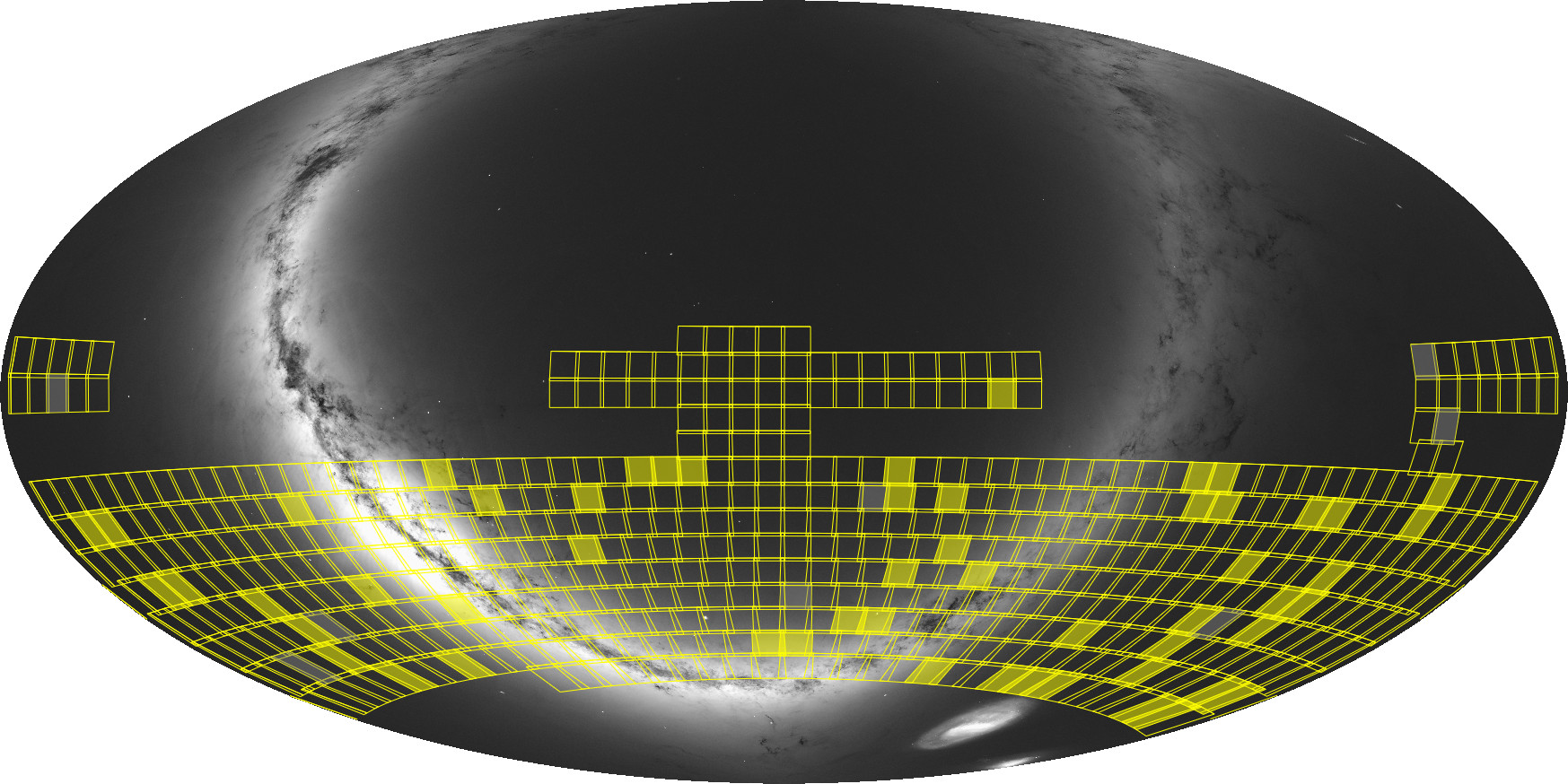
The WALLABY survey has made good progress during 2025. A total of 132 WALLABY survey footprints have been successfully observed so far (as of 31 December 2025), thus taking the survey’s completeness to around 11.5%. A map showing the current sky coverage of WALLABY is shown in Fig. 1 and includes all footprints that have been verified and accepted at this stage. The data quality continues to be satisfactory, with a near-100% acceptance rate of WALLABY observations.
Several improvements have recently been added to the WALLABY data processing pipeline to enhance the quality and efficiency of the survey. This includes a new sky model calibration strategy which reduces the cadence of primary calibrator observations with every single phased array feed (PAF) beam, thus cutting down the daily calibration overhead from hours to minutes. Another new feature currently being trialled is offset field imaging to subtract the emission from bright continuum sources located outside of the region being imaged. If successful, this will ultimately enable WALLABY to significantly expand its sky coverage to regions which are currently off-limits due to bright continuum emission.
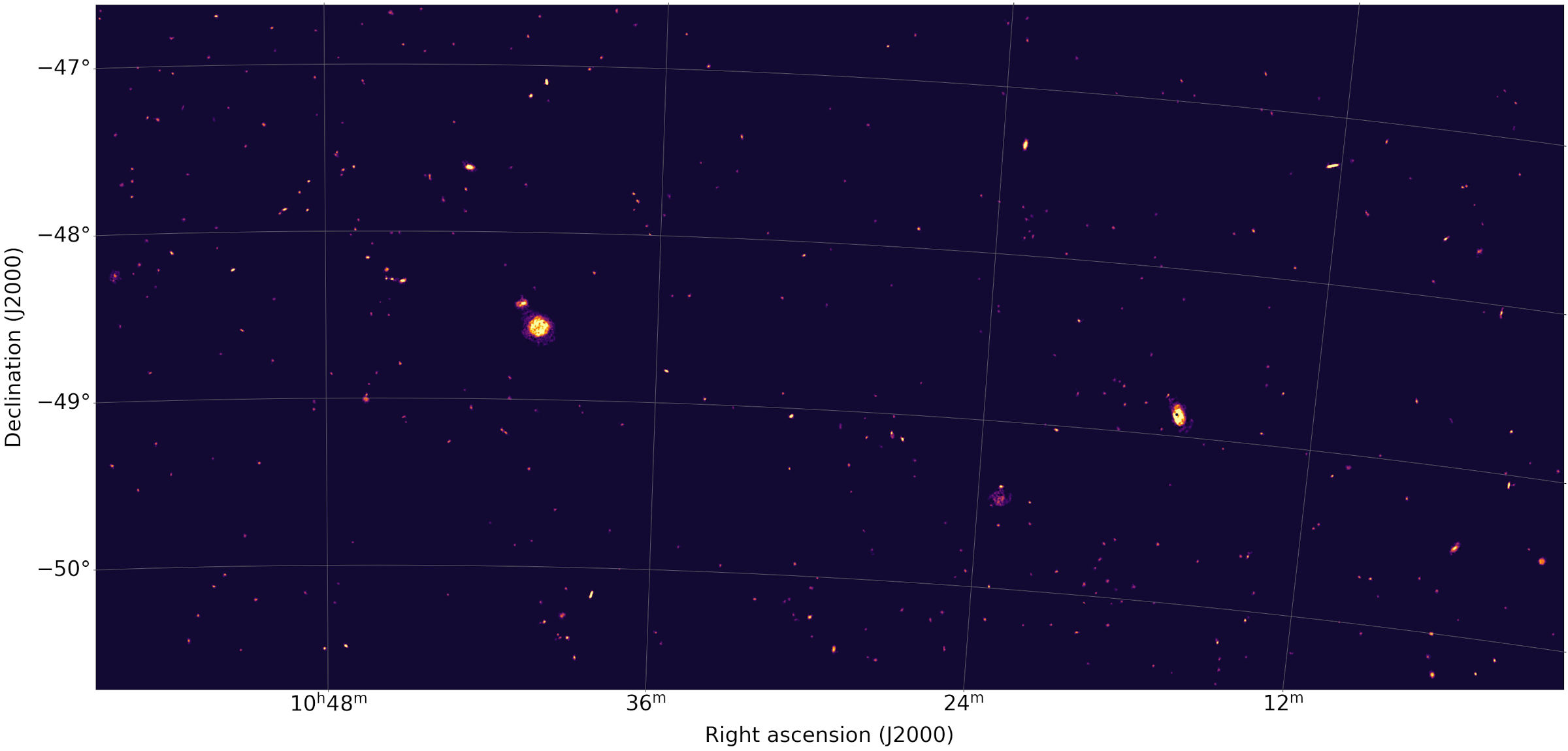
With full survey observations progressing, the WALLABY source finding pipeline continues to produce source catalogues and data products for the inner 4° × 4° regions of all full 16-hour tiles where we already reach the full sensitivity of ~1.6 mJy RMS. A few contiguous regions covered by multiple adjacent tiles have also been completed at this stage (e.g. Fig. 2), thus allowing us to additionally create source catalogues for the overlap regions between tiles.
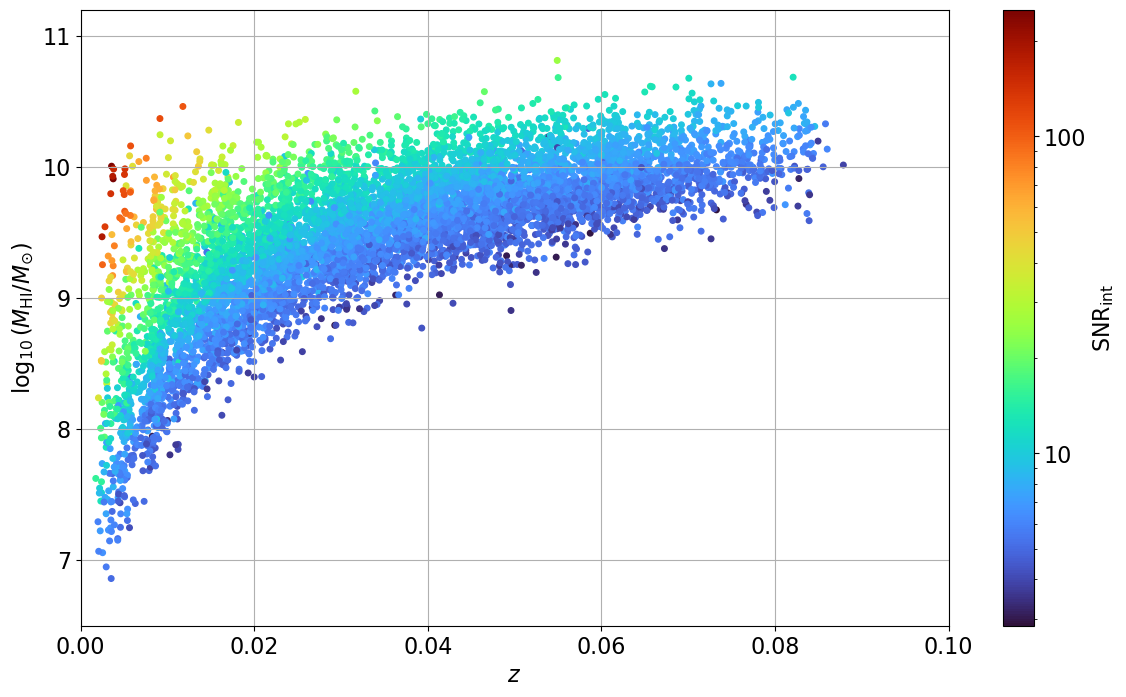
Almost 6000 HⅠ detections from full survey observations have been internally released so far and are available to WALLABY team members through the Australian SKA regional centre (AusSRC) source database using the “WALLABY” tag. Combined with the pilot survey data, approximately 8000 galaxies are now available to the team for scientific analysis which represents an unprecedented sample of spatially resolved HⅠ detections of galaxies (Fig. 3). Team members can access the data using the Jupyter notebooks available on GitHub. Data access credentials can be retrieved from the internal Redmine team wiki. We will continue to release sources and data products (images, spectra, kinematic models, etc.) to the team over the coming months and years as survey observations progress.
New Member Profiles
Ajay Dev

Hi WALLABY team! I’m Ajay Dev, a final-year PhD candidate at the International Centre for Radio Astronomy Research (ICRAR), University of Western Australia (UWA). I recently submitted my PhD thesis, Hot Gas, Cold Gas and Stars: Mapping the Halo Baryon Budget in the Local Universe. I am currently based at ICRAR, applying for postdoctoral positions and awaiting my thesis examination.
My research interests centre on galaxy formation and evolution, particularly how baryons are distributed among stars, cold gas, and hot plasma as a function of halo mass and environment. I work extensively with large extragalactic surveys, combining HI 21-cm observations (DINGO, ALFALFA) with optical spectroscopic surveys (GAMA, SDSS, DEVILS, WAVES) and X-ray data (eROSITA). A key component of my thesis involved HI spectral stacking to measure the average atomic gas content of galaxies and galaxy groups. I have applied this approach both at the group scale using single-dish ALFALFA data and at the galaxy scale using interferometric ASKAP DINGO observations, anchored to optically selected galaxies and groups from GAMA.
I’m excited to engage with the WALLABY team and to use this outstanding dataset to explore the cold-gas content of dark matter haloes and its connection to other multi-wavelength tracers of galaxy evolution.
Anthony Carr

Hello WALLABY! My name is Anthony, and I am currently a postdoctoral researcher at the Korea Astronomy and Space Science Institute (KASI) in Daejeon, South Korea, after completing my PhD at the University of Queensland in 2023.
My background is in (optical) observational cosmology, focusing on Type Ia supernovae and peculiar velocities to probe the expansion history of the Universe and the nature of dark energy. Recently, I have been working on the Dark Energy Spectroscopic Instrument (DESI) peculiar velocity catalogue, specifically calibrating the Fundamental Plane and Tully-Fisher relationships and using them to measure the expansion rate of the Universe. I hope to work similarly with the incredible WALLABY Tully-Fisher sample.
I’m excited to work with some of you on peculiar velocity cosmology while also learning about radio observations.
The extensive interaction of NGC 4532 and DDO 137 with the Virgo cluster
by Lister Staveley-Smith and WALLABY team
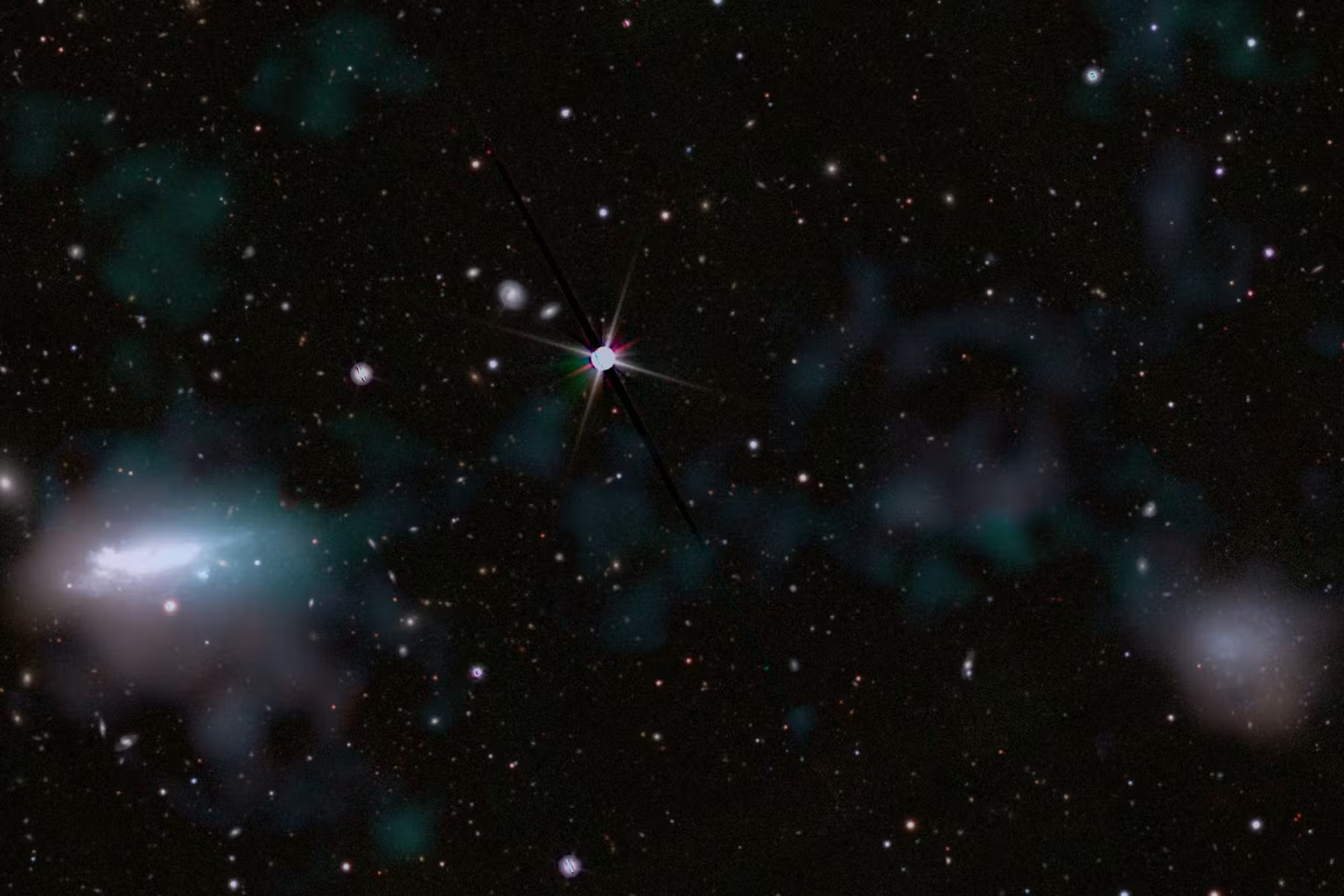
This is another example where WALLABY has picked out extensive HI associated with an otherwise inconspicuous galaxy system. In this case, it is the dwarf galaxy pair NGC 4532 and DDO 137. The galaxies are separated by 48 kpc, but are now seen to be connected by a massive bridge of gas. Given that this system is also the origin of an even longer tail of gas (500 kpc!) previously discovered by the Arecibo telescope, the new WALLABY data offers an opportunity to dissect likely interaction mechanisms in more detail than previous studies.
The conclusions of the study, aided by new eROSITA data, are that tidal interaction between the pair has been responsible for outflow of gas from the two galaxies. But, surprisingly, it is probably the nearby Virgo cluster that is: (a) preventing the pair from merging as quickly as they otherwise would; and (b) providing sufficient ram pressure to strip the tail. This is despite the system being almost 3 virial radii away from Virgo and the ambient electron density being only 10−5 cm−3. Although these parameters are very different from those of the Magellanic system, the joint tidal/ram-pressure origin mechanisms appear to be remarkably similar.
More details can be found on the MNRAS website (MNRAS, vol 543, pp 526-539). Media articles are published on the ICRAR website and in The Conversation. Follow-up observations with MeerKAT and FAST (FEASTS) have been obtained.
An untargeted search for HI-bearing UDGs uncovers the first known UDG pair
by Tamsyn O’Beirne
HI-bearing ultra-diffuse galaxies (UDGs) are intriguing objects. Despite their large sizes and significant gas reservoirs, they host remarkably few stars. While their low optical surface brightness makes them challenging to detect in traditional imaging surveys, WALLABY is uniquely positioned to uncover and characterise this population through an HI perspective.
In our recent paper (O’Beirne et al., 2025b), we searched for UDGs using the WALLABY pilot survey fields together with the full survey fields available by mid-2025 (that overlap with DESI Legacy Imaging Survey; Dey et al., 2019). Across ~690 deg2, we identified 10 UDGs that meet the commonly used criteria outlined by van Dokkum et al. (2015; 𝜇0,g > 24 mag arcsec−2 and Re> 1.5 kpc). However, these criteria are not physically motivated, multiple definitions exist in the literature, and uncertainties in the models and distances can strongly affect the sample selection. For this reason, we also include an additional 12 faint diffuse galaxies, bringing the total sample to 22.
Within our sample, we highlight the first discovery of a pair of UDGs, shown in Fig. 5. The two galaxies are separated by just 75 arcsec (22 kpc at 61.9 Mpc) and have a small central HI velocity difference of 34 km s−1. Locally, the system is very isolated, with no other galaxies or HI sources within 30 arcmin (525 kpc) and ±1000 km s−1. However, in the context of the larger-scale structure, the pair is located outside the virial radius of the Hydra cluster (1.6 × Rvir), with its position on the phase-space diagram indicating that it is infalling into the cluster. The identification of this HI-bearing UDG pair raises important questions around the formation of such a unique system and the evolution of UDGs in a transitional phase before ram pressure stripping and cluster infall.
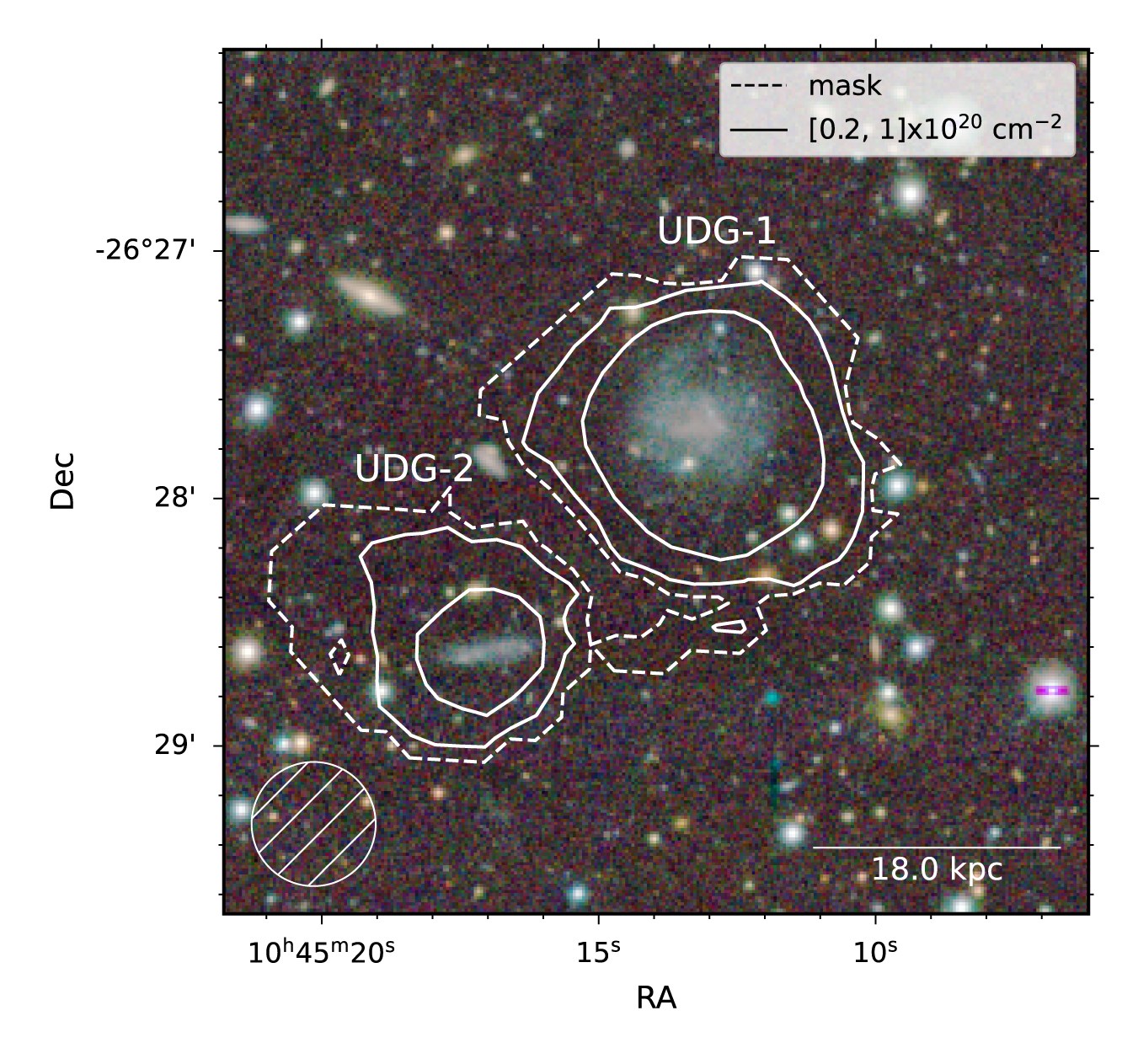
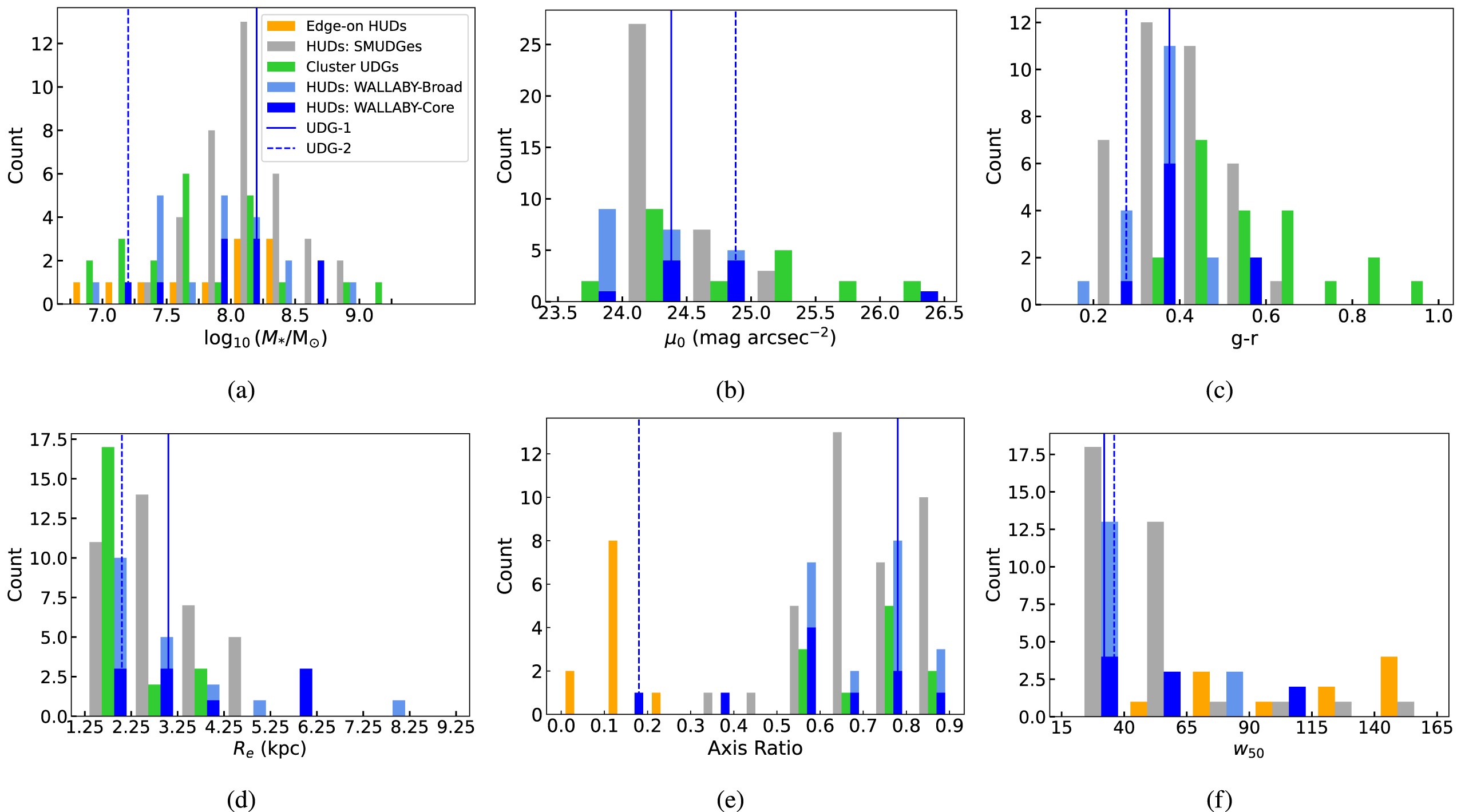
Fig 6. compares the WALLABY UDGs with other HI-selected and optically-selected UDGs. Panel e shows that UDGs with small axis ratios (i.e. edge-on systems) are rarely identified without a dedicated search, highlighting the unusual nature of UDG-2. That said, UDG-2 has a flat central g-band surface brightness profile, and its HI kinematic axis is ~35 deg misaligned from the optical axis, suggesting that it may not actually be edge-on. Instead, the optical morphology may reflect the stochastic star formation commonly observed in low-mass galaxies. If UDG-2 is indeed edge-on, then it is remarkable that it still satisfies the UDG criteria. Correcting its central surface brightness to a face-on orientation would place it among the most extreme sources in panel b, right at the limits of detectability. This hints that some optically dark sources, such as those reported in O’Beirne et al. (2025a), may host detectable optical counterparts when viewed from a more favourable orientation.
HI depletion times within the stellar discs with WALLABY
by Seona Lee
HI typically extends well beyond the inner, star-forming discs of galaxies. As a result, global HI scaling relations combine dense inner HI with diffuse outer HI, obscuring the physical connection between HI and star formation and contributing to the large scatter seen in global relations.
In Lee et al. 2025, using nearly 1,000 gas-rich galaxies from four WALLABY pilot fields, we demonstrated that restricting HI measurements to the stellar disc, defined by the i-band isophotal radius at 25 mag arcsec−2 (R25), provides a clearer link between HI and star formation than global measurements. Building on this work, we have recently submitted a follow-up paper to MNRAS, analysing a subset of 841 WALLABY galaxies to examine how HI depletion times and their scaling relations change when both HI and star formation are confined to the stellar disc.
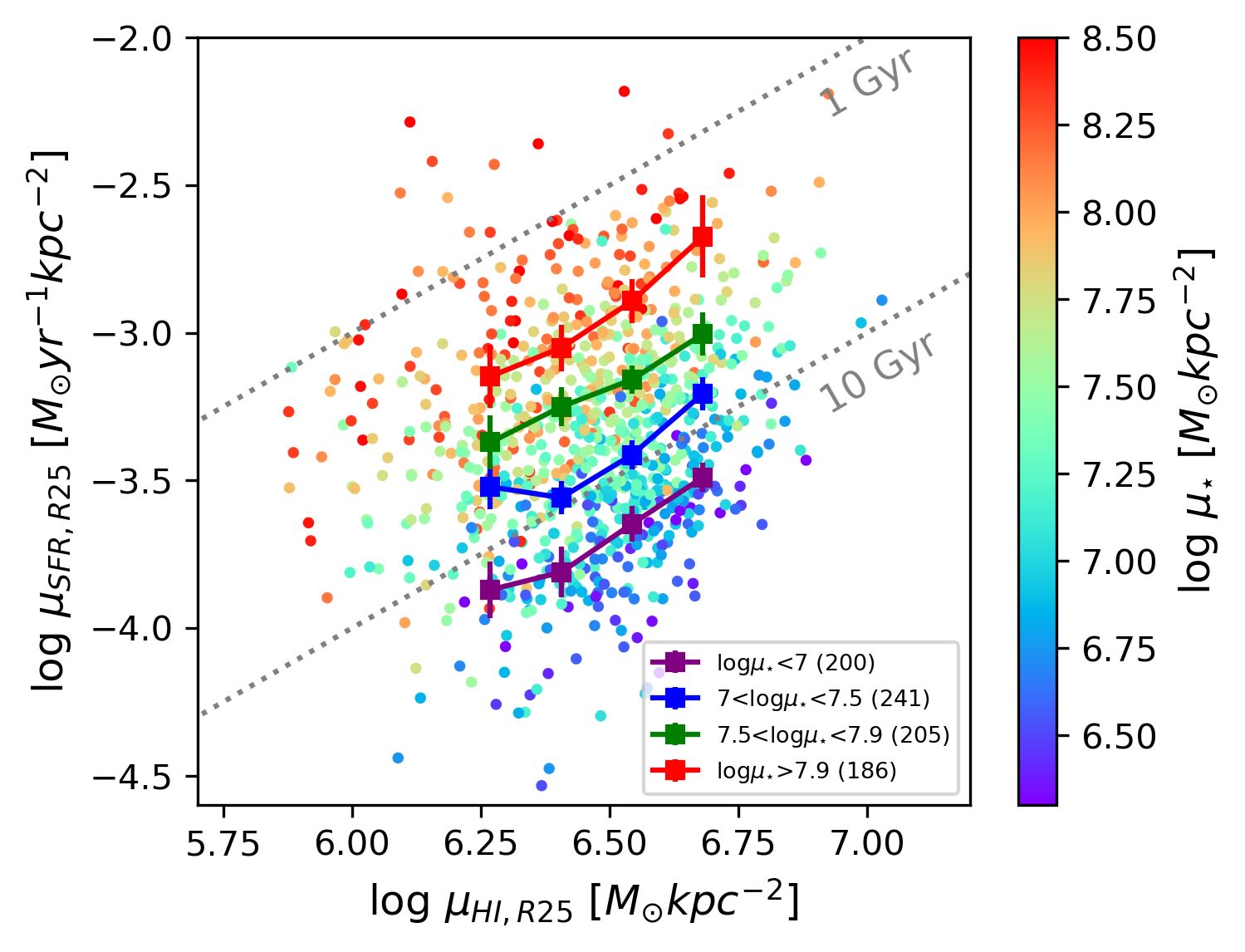
We find that HI depletion times measured within the stellar disc are on average ~1.4 Gyr shorter than global values and show a strong anti-correlation with stellar surface density. Interestingly, the Kennicutt–Schmidt relation within the stellar disc (Fig. 7) further reveals an almost constant HI depletion time at fixed stellar surface density, similar to the behaviour seen for molecular gas, suggesting that HI and star formation are regulated by conditions that enable HI–to–H2 conversion. Beyond R25, HI depletion times are on average ~10 Gyr longer, confirming the extremely inefficient star formation in the low-density outer regions of galaxies. These results highlight the power of WALLABY’s spatially resolved HI measurements across large statistical samples for advancing our understanding of how HI fuels star formation.
TWG 7 – WALLABYcat
by Nathan Deg
Work on the WALLABY archive has continued, with some significant milestones being reached. There are now > 8000 unique source detections available to the WALLABY team through the AusSRC database! Additionally, there are ~800 kinematic models available! This is the largest collection of HI derived kinematic models from any single radio survey to date! These all can be accessed fairly easily through the database access notebooks.
Upcoming Meetings & Workshops
Note: WALLABY team members can download PDF copies of several WALLABY-related presentations at international meetings from the internal Redmine wiki under “WALLABY-related presentations and material”.
| When | What | Where |
| Monthly WALLABY Science Meeting* | Online | |
| 2026, Feb 18-19 | ATNF Futures 2030 Workshop | Marsfield, Australia |
| 2026, Mar 24-26 | ACAMAR 11 workshop | Geraldton, Australia |
| 2026, May 4-8 | 2026 Asia-Pacific Regional IAU Meeting (APRIM 2026) | Hong Kong |
| 2026, June 1-5 | ATNF Radio School 2026 | Narrabri, Australia |
| 2026, June 8-12 | The Drivers of Galaxy Evolution through Cosmic Time | Florence, Italy |
| 2026, June 10-12 | Machine Learning meets Galaxy Classification 2: New Observations, New Challenges | Madrid, Spain |
| 2026, July 5-10 | Radio Telescopes, Technologies, and Methods | Copenhagen, Denmark |
| 2026, July 6-10 | AGN Feedback Across All Scales and Time | Garching, Germany |
| 2026, July 13-17 | The Many Scales of Galaxy Environments | Ascona, Switzerland |
| 2025, Aug 15-22 | URSI General Assembly and Scientific Symposium (GASS 2026) | Kraków, Poland |
| 2026, Sept 7-11 | ERIS 2026 – XI European Radio Interferometry School | Noto, Italy |
| 2026, Oct 12-16 | The Pathfinder HI SCience Community (PHISCC) Workshop 2026 | Beijing, China |
WALLABY Publications
Aug 2025 – Feb 2026:
- Staveley-Smith L., Bekki K., Boselli A., Cortese L., Deg N., For B.-Q., Lee-Waddell K., et al., 2025, WALLABY pilot survey: the extensive interaction of NGC 4532 and DDO 137 with the Virgo cluster, MNRAS, 543, 526. doi:10.1093/mnras/staf1443
- Deg N., Spekkens K., Arora N., Dudley R., White H., Helias A., English J., et al., 2025, WALLABY Pilot Survey: Characterizing Low-rotation Kinematically Modeled Galaxies, ApJ, 994, 232. doi:10.3847/1538-4357/ae1003
- O’Beirne T., Kilborn V. A., Cluver M. E., Wong O. I., Deg N., Spekkens K., Arora N., et al., 2025, WALLABY: an untargeted search for H I-bearing ultra-diffuse galaxies uncovers the first known ultra-diffuse galaxy pair, MNRAS, 544, 1799. doi:10.1093/mnras/staf1840
A complete list of WALLABY ADS libraries can be found at https://wallaby-survey.org/papers
WALLABY Science Projects
Since the previous newsletter was released, new science project proposals, led by WALLABY members Ivy Wong and Yago Ascasibar, have been approved and added to the list of official projects. Further details can be found on our Current Projects list, linked on our internal Redmine wiki. Team members are reminded to regularly check this list. If you are interested in contributing to any of the existing science projects, please feel free to get in touch with the PI of the project in question.